Residents across Lake Oswego, West Linn and Oregon City could see new syringe disposal boxes, a chronic pain summit and added public health staffing after the Clackamas County Board of Commissioners took up three proposals totaling $179,165 in opioid settlement funds at its Tuesday, Aug. 11, policy session in Oregon City.
The specific locations for new syringe boxes have not been named, leaving open which communities will benefit first.
According to the policy session worksheet, county staff recommended the board approve all three requests, drawn from $716,397 in unallocated opioid settlement money.
The largest chunk, $125,000, would fund a public health position handling contract administration, grant management, annual reporting and settlement tracking. Staff told the board that previous allocations fell short of covering this work, creating funding gaps that have not been recouped.
The second proposal, $43,165, would buy, install and service three new syringe disposal drop boxes for one year. The county said only that boxes would go in "strategic locations throughout the county." Two pilot boxes already operate at the Beavercreek Health Center and the Happy Valley Police Department on King Road, run by Metro. The board had directed staff at a July 14 policy session to explore expanding that pilot.
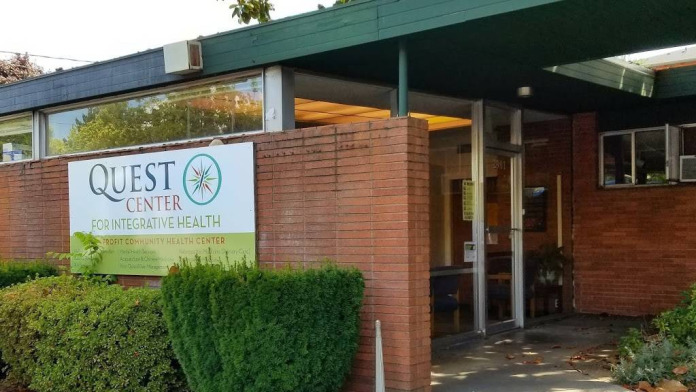
The third request, $11,000, would fund a Clackamas County Pain Summit hosted with Quest Integrative Health and Clackamas Health Centers. The summit aims to educate providers and community members about chronic pain resources and connect them to opioid settlement-funded programs.
County health data shows chronic pain is a common risk factor for substance use, overdose and suicide risk.
The summit budget includes $2,500 for speaker and lived-experience honoraria, $6,000 for staff planning time, $1,500 for refreshments and a healthy food demonstration, and $1,000 for contracted community acupuncture through Working Class Acupuncture. The venue is free.
Mary Rumbaugh, director of Health, Housing and Human Services, and Kim La Croix, the county's public health division director, presented the three proposals to the five-member board: Chair Craig Roberts and Commissioners Diana Helm, Paul Savas, Martha Schrader and Ben West.
The $179,165 comes from Fund 230, the county's opioid settlement account. In November 2025, the board awarded $3.56 million in settlement funds to continue internal and community grantee projects for one year. Because that exceeded what was needed, the $716,397 balance remained.
One unresolved question: ongoing funding to service the syringe boxes after the first year has not been identified. Staff said they plan to bring a comprehensive opioid settlement funding update and fiscal year 2028 recommendations to the board at a future meeting, though no date has been set.