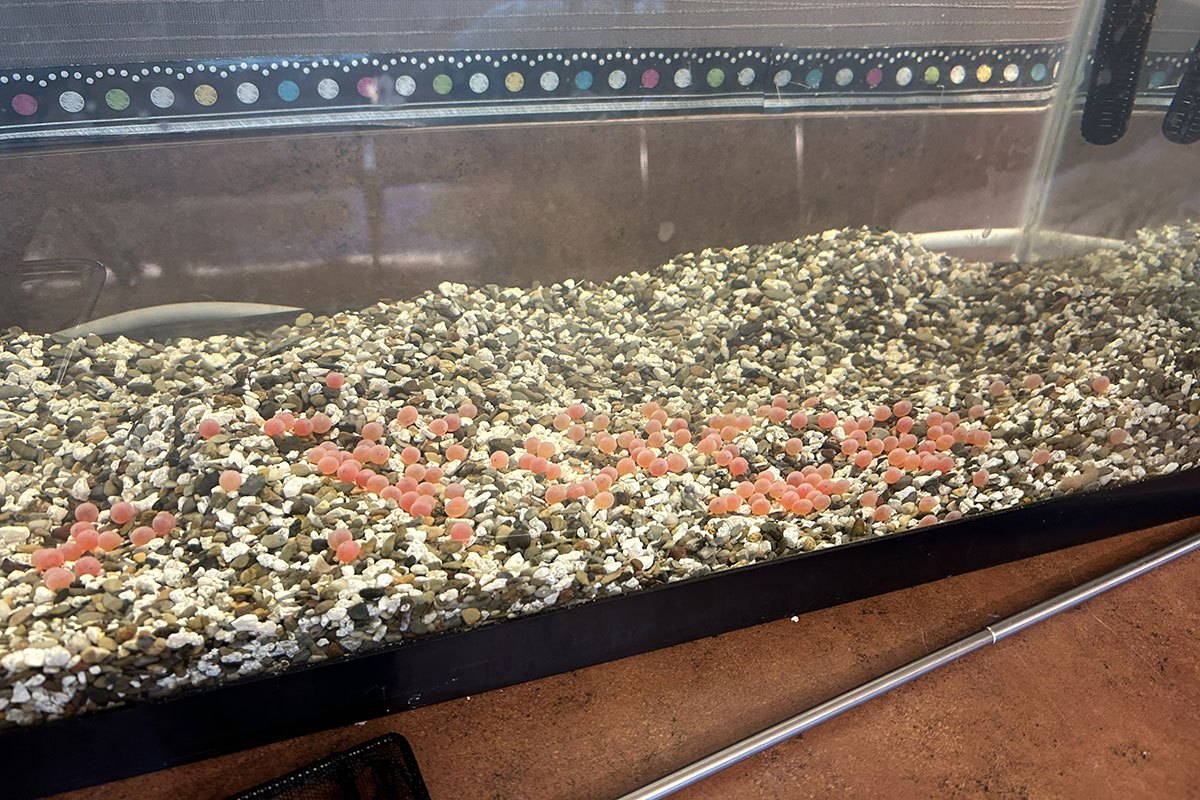
Clackamas Water Environment Services staff delivered hundreds of Chinook salmon eggs to area classroom aquariums, the agency announced Oct. 27.
The deliveries are part of the Oregon Department of Fish and Wildlife's (ODFW) Fish Eggs to Fry program, which brings salmon and trout eggs into classrooms to be raised by students in aquariums and then released. WES staff talked with students about water quality and the need for healthy salmon habitat, according to a WES announcement.
The program teaches students about the salmon life cycle. It also helps them learn how everyday choices can affect rivers, streams and wildlife, WES said.
Rain, for example, can wash pollution from streets, sidewalks and yards into storm drains and nearby streams. According to WES's watershed protection program, stormwater runoff is the most significant source of water pollution in the state.
It carries silt, oil, chemicals, trash and pesticides to the nearest creek, stream or wetland.
When trash like plastic bags, bottles and cigarette butts lands on the ground, it gets washed into storm drains and directly into local waterways, according to WES's stormwater education page.
That debris can choke, suffocate or disable aquatic life including ducks, fish, turtles and birds.
The lesson for students: what hits the ground ends up in the water.
Jim Cartan, WES education and outreach coordinator, took part in his first egg delivery. In the announcement, Cartan said the program helps the agency reach young people who can share what they learn at home.
"The Fish Eggs to Fry program gives WES a chance to connect with young people and help them share what they learn with their families and communities," Cartan said.
He named ODFW, the Association of Northwest Steelheaders, the National Wildlife Federation and WES as partners helping students understand how sewer systems, everyday choices and healthy ecosystems connect to the Clackamas and Willamette River watersheds.
Students will care for the eggs as they hatch and grow into young salmon called fry.
Once the fish are ready, they will release them into the river where the eggs originated.