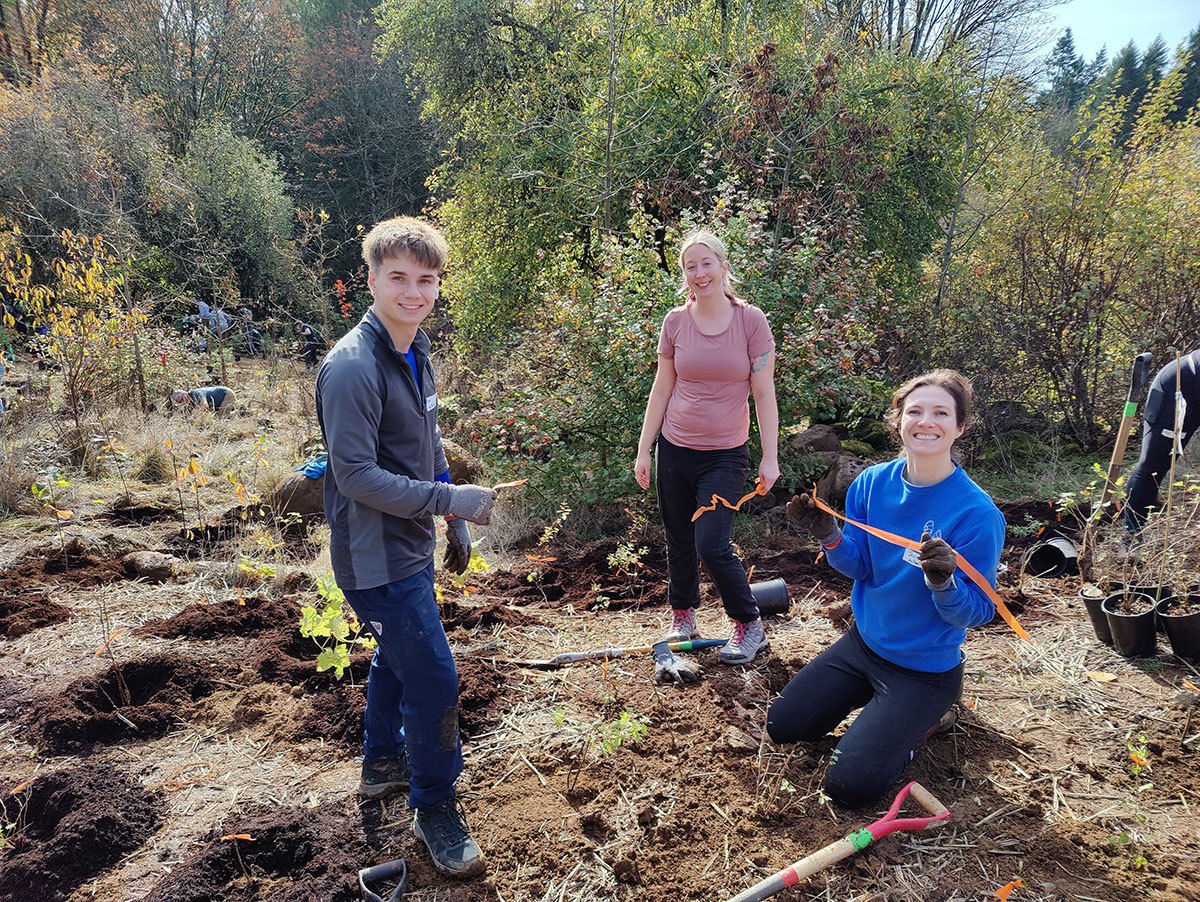
Thirteen organizations planted more than 2,100 trees, ripped out invasive species from 53 acres and taught 1,411 students about local waterways during the past fiscal year, all funded by $330,000 in Clackamas County watershed grants.
Clackamas Water Environment Services published its annual RiverHealth Watershed Stewardship Program accomplishments report on Thursday, Aug. 20, tallying the work of grant recipients across the county's creeks and streams during fiscal year 2025-26.
The numbers tell a story of breadth: 40 restoration sites, 11,642 linear feet of streams worked on, 11,766 shrubs planted and 416 volunteers logging 3,206 hours.
Where the money went
Individual grants ranged up to $30,000. Several projects touched watersheds familiar to Lake Oswego and West Linn residents:
- Friends of Trees ($30,000) organized volunteer planting events at Rose Creek with Oregon Trail Elementary and Sabin-Schellenberg High School students.
- North Clackamas Watersheds Council ($30,000) expanded riparian restoration at Parmenter Ponds in the Kellogg-Mt. Scott Watershed, using thermal drone imagery to locate cold-water plumes and pinpoint new restoration sites.
- Johnson Creek Watershed Council ($23,561) rallied 200 volunteers for the annual Johnson Creek Clean-Up and another 250 for a watershed-wide planting day.
- Columbia Land Trust and Bird Alliance of Oregon ($27,175) enrolled about 30 new sites in the Backyard Habitat Certification Program, bringing the total to roughly 268 properties.
Other recipients included the Clackamas River Basin Council, which ran its "Shade Our Streams" program at four sites in the Rock and Sieben Creek watersheds, and Bob's Red Mill, which used a $20,000 grant to restore a 4.56-acre wetland at its headquarters by replacing invasive Himalayan blackberry with native plants.
More events, fewer individual students
The program delivered far more lessons and events than the prior year, though it reached fewer individual students. Grantees hosted 809 lessons, field trips and tours and 87 public events, up from 468 lessons and 34 events in 2024-25. Student contacts fell from 1,776 to 1,411, even as the number of public events more than doubled.
The Wetlands Conservancy used $25,600 to expand monitoring at Hearthwood Wetlands, partnering with the Indigenous Workforce Crew led by Mad Bears LLC and involving neighbors from Hearthwood Mobile Home Park. Ecology in Classrooms and Outdoors brought students at Whitcomb Elementary and Clackamas High School into hands-on watershed work in the Kellogg-Mt. Scott Watershed.
Program growth
WES launched the stewardship program in November 2013. Annual funding has more than doubled since then, growing from $152,000 in the first year to the current $330,000, according to the county report. The grants help WES meet state and federal requirements to reduce pollution in local waterways while engaging residents in hands-on stewardship.
The next grant application cycle for fiscal year 2027-28 opens in February 2027. Grants of up to $30,000 are available to community groups, nonprofits, schools, businesses and neighborhood associations. Residents with questions can contact program coordinator Gail Shaloum at 503-742-4597 or [email protected].
Coming up
The Johnson Creek Cleanup is scheduled for Saturday, Aug. 22, from 8:45 a.m. to noon.