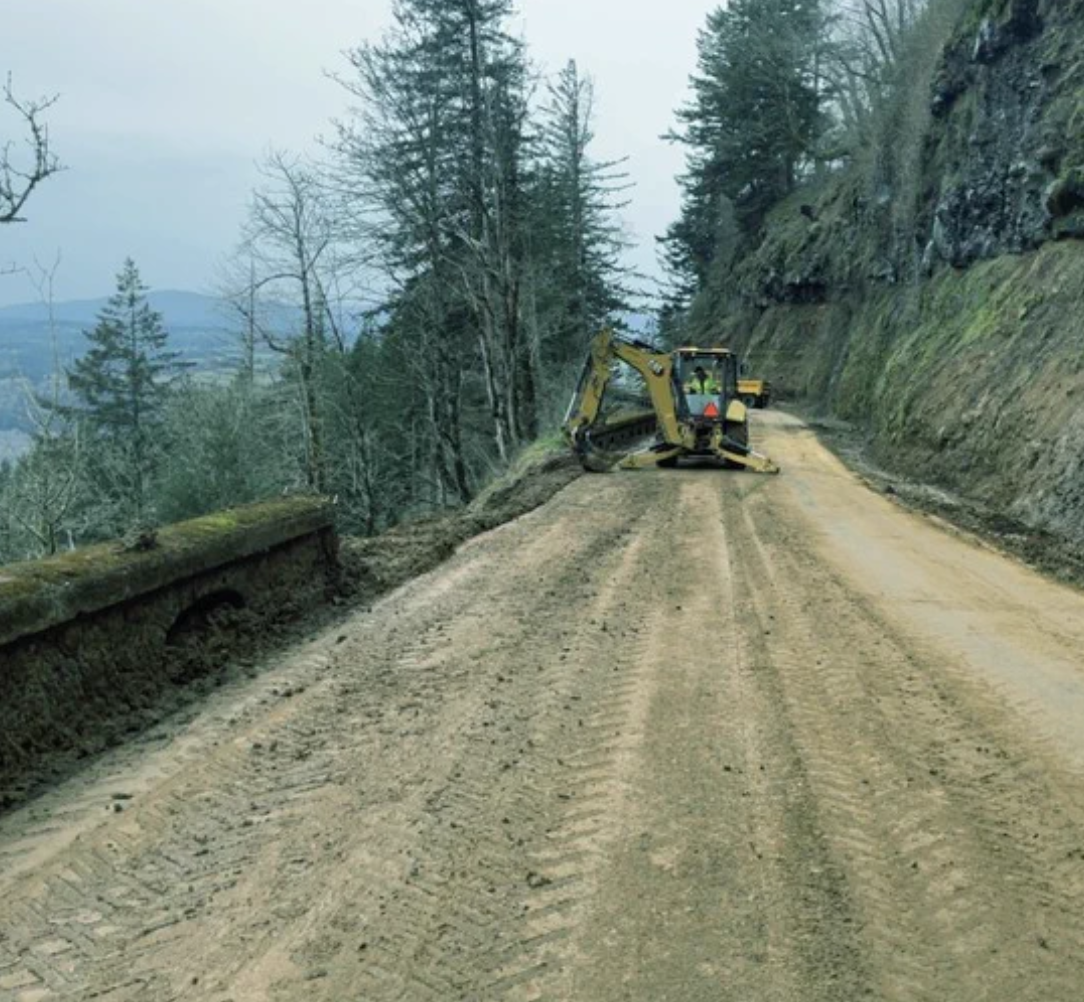
The highway crews that cleared landslides from the Columbia River Gorge and Cascade Mountain passes this past year would shrink under proposed budget cuts at the Oregon Department of Transportation, leaving routes used daily by Lake Oswego, West Linn and Oregon City commuters more vulnerable to severe weather.
ODOT faces a $200 million budget gap in the 2027-29 cycle, its fifth consecutive budget requiring cuts, and the maintenance and operations branch would take the hardest hit: 193 positions eliminated, according to a West Linn Tidings report published Aug. 21. Without new revenue, the agency would lose 550 jobs total, 11% of its workforce.
The cuts would reduce a third of Oregon's 80 statewide maintenance crews to five people or fewer, ODOT Chief Engineer Tova Peltz said. Those crews currently range from five to more than 20 during winter months.
"I know folks are working long hours and we're bringing in folks from the west side of the state to support crews on the east side that have been working nonstop through the fires," Peltz said. "I worry that that is going to get so much worse in the future."
Landslides already hitting close to home
Landslides affect 7% of Oregon's highway system, nearly 500 miles of road, according to ODOT. Vulnerable stretches include the Columbia River Gorge and Cascade Mountain passes.
The threat is real. In December 2025, back-to-back atmospheric rivers triggered a landslide that wiped out portions of Salmon River Road near Welches in Clackamas County, prompting Level 3 "Go Now" evacuation notices. A separate possible landslide was reported in Oregon City behind a home on Applegate Terrace. In March 2026, another atmospheric river closed the Historic Columbia River Highway between Larch Mountain Road and Vista House after an active landslide.
ODOT spends about $2.5 million a year on landslide mitigation and $18.1 million on landslide-related repairs statewide.
How the budget hole got this deep
The gap stems largely from inflation and declining gas tax revenue as more Oregonians drive electric vehicles. ODOT has already cut more than half a billion dollars since 2019 through office consolidations, IT upgrades and eliminating at least 11 vacant senior executive positions, according to the Oregon Capital Chronicle.
Oregon voters deepened the problem in May 2026 when they overwhelmingly rejected a referendum that would have brought $4.3 billion in new tax revenue to ODOT over the next decade, including increases to gas and payroll taxes and vehicle registration and title fees. Lawmakers then redirected about $218 million within ODOT's budget during the 2026 legislative session to prevent immediate layoffs, according to the Statesman Journal, but that was a one-time fix.
In summer 2026, wildfires scorched a record 2.5 million acres in Oregon, diverting maintenance crews from routine work like patching potholes and cleaning culverts to managing traffic, hauling equipment from fire zones and coordinating evacuations.
ODOT has no dedicated severe-weather budget; it pulls from maintenance funds and waits for federal reimbursement. After the 2020 Labor Day fires, that reimbursement took five years.
University of New Hampshire civil engineering professor Jo Sias, who authored a 2025 study on climate impacts to roads, said climate change is projected to increase national pavement maintenance costs by more than $500 million annually by 2050.
Staffing cuts would only accelerate the deterioration, she warned.
What residents can do
Gov. Tina Kotek's 12-member "Rebuilding Our Transportation Vision" workgroup has until the end of 2026 to deliver funding recommendations ahead of the 2027 legislative session.
A public survey on transportation priorities is open until 6 p.m. Sept. 10 at cognitoforms.com/ODOT2/ROTVSurvey. Residents can also email the workgroup at [email protected].
No Clackamas County, Lake Oswego, West Linn or Oregon City officials have publicly commented on the proposed ODOT maintenance cuts.